Indonesia’s transition toward a low-carbon energy system is entering a decisive phase. With the government targeting 69.5 GW of new power generation capacity by 2034, of which 76% is expected to come from renewable energy sources, the need for a more flexible, reliable, and intelligent electricity system has become increasingly urgent. This national direction is closely tied to Indonesia’s long-term commitment to achieving Net Zero Emission (NZE) 2060, while also supporting broader Sustainable Development Goals through cleaner energy systems, responsible resource use, and stronger international partnerships.
In response to this challenge, a research team from Universitas Sebelas Maret (UNS) is developing an advanced optimization framework for Battery Energy Storage Systems (BESS) that considers two critical real-world factors often overlooked in conventional planning: variable renewable energy uncertainty and battery degradation. The study is led by Dr. Chico Hermanu Brillianto Apribowo and is conducted under the International Research Network Program EQUITY THE Impact Rankings 2025. A key element of this project is its international collaboration with Dr. Srikanth Goud B, Associate Professor, Department of Electrical and Electronics Engineering, Anurag University, Hyderabad, India.
The research focuses on a growing technical challenge in energy transition systems. Renewable energy sources such as solar photovoltaic and wind power are essential for decarbonization, yet their output is inherently intermittent and uncertain. This variability can create operational issues in electricity networks, including frequency deviations, ramping stress, curtailment, and reliability risks. BESS is widely recognized as a strategic solution to improve system flexibility, absorb surplus renewable generation, and support stable grid operation. However, battery systems also degrade over time, and ignoring this degradation in planning models can lead to shorter lifetime, higher lifecycle costs, and suboptimal investment decisions.
To address this gap, the UNS research proposes a machine learning-assisted optimization framework that integrates battery degradation modeling, renewable generation uncertainty, and power system operational constraints into a unified decision-making model. Using a modified IEEE 24-bus system to represent Indonesia’s future grid scenario, particularly in the context of higher renewable penetration, the research combines Mixed-Integer Linear Programming (MILP), Unit Commitment (UC), and DC Optimal Power Flow (DC-OPF) methods with data-driven prediction techniques. This framework is expected to determine the optimal capacity, location, and operation strategy of BESS while minimizing cost, improving flexibility, and reducing emissions.
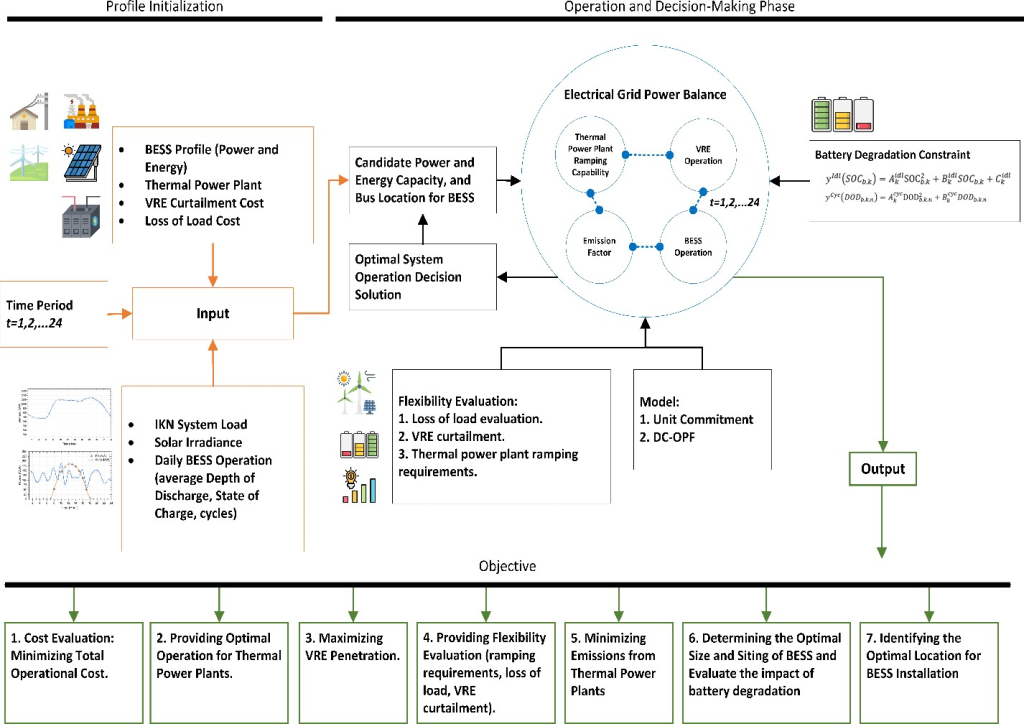
Fig. 1 Operational Decision-Making Framework for BESS Sizing and Siting Optimization
Beyond its technical contribution, the study also has important economic implications. More reliable and cost-effective battery storage can accelerate renewable deployment, reduce dependence on fossil-based peaking units, and enhance the productivity of electricity systems that support industry, services, and digital infrastructure. In this sense, the research contributes directly to SDG 8 – Decent Work and Economic Growth, especially in the context of green economic growth. Smarter battery deployment can support new value chains in renewable integration, storage system design, intelligent grid management, and clean-energy services. As Indonesia expands its low-carbon economy, innovations like this can strengthen national competitiveness while creating opportunities for more sustainable industrial development.
The project also reflects the importance of SDG 17 – Partnerships for the Goals. Energy transition is not only a domestic policy issue; it is also a global scientific and technological challenge that benefits from cross-border academic collaboration. Through the partnership between UNS and Anurag University, the research is designed not merely as a single publication effort, but as a broader academic cooperation platform that strengthens international knowledge exchange and the quality of scientific output.
Planned Collaboration with Anurag University
The collaboration with Dr. Srikanth Goud B is structured around several concrete academic activities: (1) Joint research development Both parties collaborate in refining the research framework, discussing technical assumptions, and strengthening the modeling approach related to battery degradation, renewable uncertainty, and energy storage optimization. (2) Joint scientific publication The project targets a joint publication in a reputable Scopus-indexed international journal (minimum Q2), with a provisional manuscript title on decarbonizing power systems with high renewable penetration and battery degradation-aware BESS planning. (3) Working paper and research discussion sessions The partnership includes research exchange through working paper presentations, technical review sessions, and scholarly feedback to improve the robustness, visibility, and academic quality of the study. (4) Guest lecture or invited academic session The collaboration may include guest lectures, invited presentations, or academic sharing sessions conducted online or onsite to expand research dissemination and student exposure to international perspectives. (5) International scientific dissemination The research findings are planned to be presented in at least one international scientific forum, helping expand the global relevance of Indonesia’s energy transition research agenda. (6) Strengthening UNS’s international academic network
The collaboration also supports UNS in enhancing its global academic engagement and strengthening its contribution to international benchmarking and SDG-related impact initiatives.
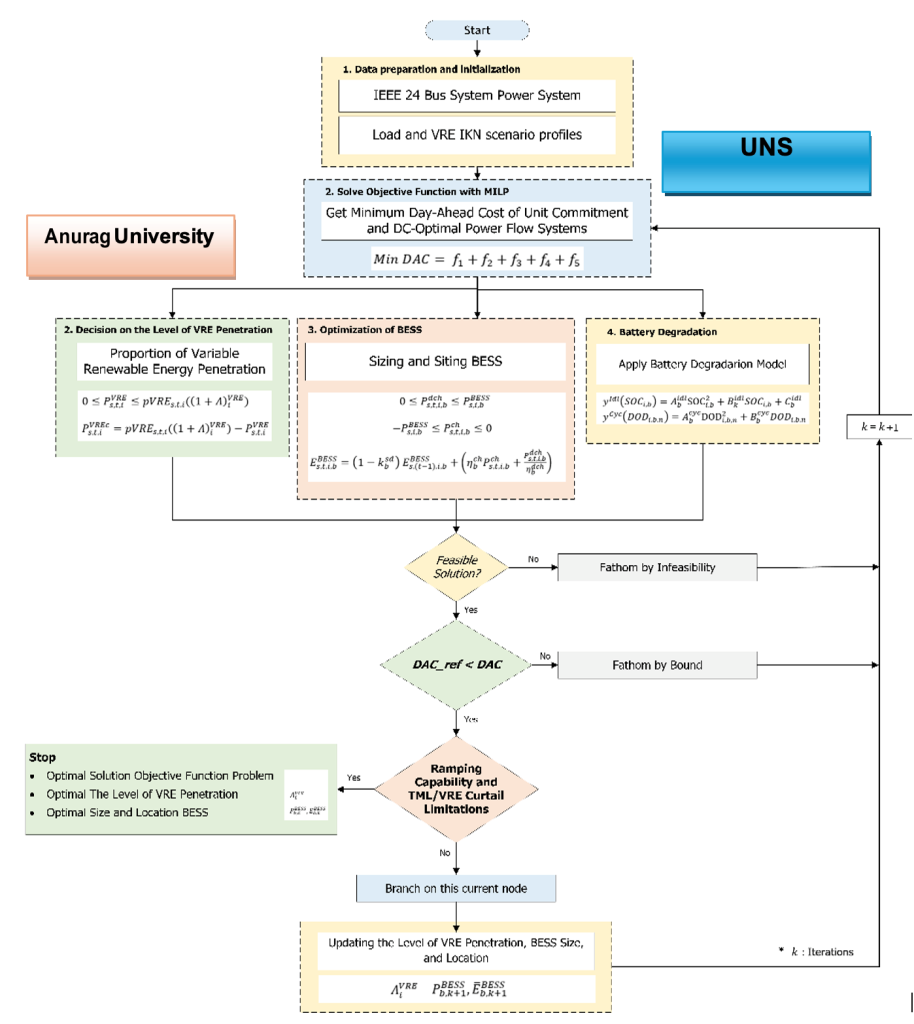
Fig. 2 Methodological Flowchart for MILP-Based Optimization of BESS
This cooperation is especially relevant because the project is not only about optimizing a technology, but also about building a knowledge bridge between institutions in Asia that face shared energy transition challenges. With India and Indonesia both navigating large-scale renewable integration, this partnership offers a valuable platform for comparative learning and regional innovation.
In the long term, the outcomes of this research may provide useful insights for policymakers, system planners, and energy stakeholders in Indonesia, particularly in regions with increasing renewable penetration and evolving flexibility requirements. By combining machine learning, battery health awareness, and power system optimization, the study seeks to offer a more realistic and implementation-oriented pathway for storage planning in developing energy systems.
At a broader level, this initiative demonstrates that meaningful progress toward net-zero targets requires more than infrastructure investment alone. It also requires stronger models, better data-driven decision-making, and international academic partnerships that can turn research into actionable transition strategies. Through the collaboration between Universitas Sebelas Maret and Anurag University, this project aims to contribute to a cleaner power system, stronger green growth, and a more connected global research ecosystem.