
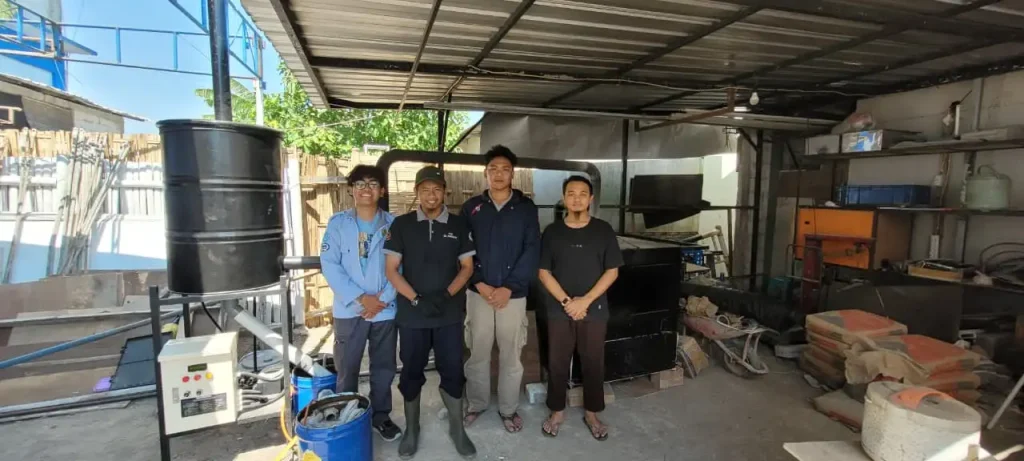
SUKOHARJO -The Community Service Team (PKM) of the Electrical Engineering Study Program at Sebelas Maret University (UNS) continues to present technological innovations as solutions to various problems faced by the community. One of the innovations that has been successfully realized is the development of an environmentally friendly incinerator to support waste management at Pondok Pesantren Hubbul Khoir, Sukoharjo Regency. This innovation is the result of research by the Electrical Engineering Study Program team at UNS, led by Ir. Sutrisno, S.T., M.Sc., Ph.D., with the aim of providing a more effective, safe, and sustainable waste management system.
As a boarding-based educational institution, Islamic boarding schools generate waste from various activities, ranging from cooking, teaching and learning processes, to the daily activities of the students. Based on the observation results, the waste management system at Pondok Pesantren Hubbul Khoir is still carried out conventionally. Waste is first collected in a temporary storage area, then burned openly when the volume has accumulated. This method has the potential to cause air pollution and also have negative health impacts due to the emissions produced during the burning process.
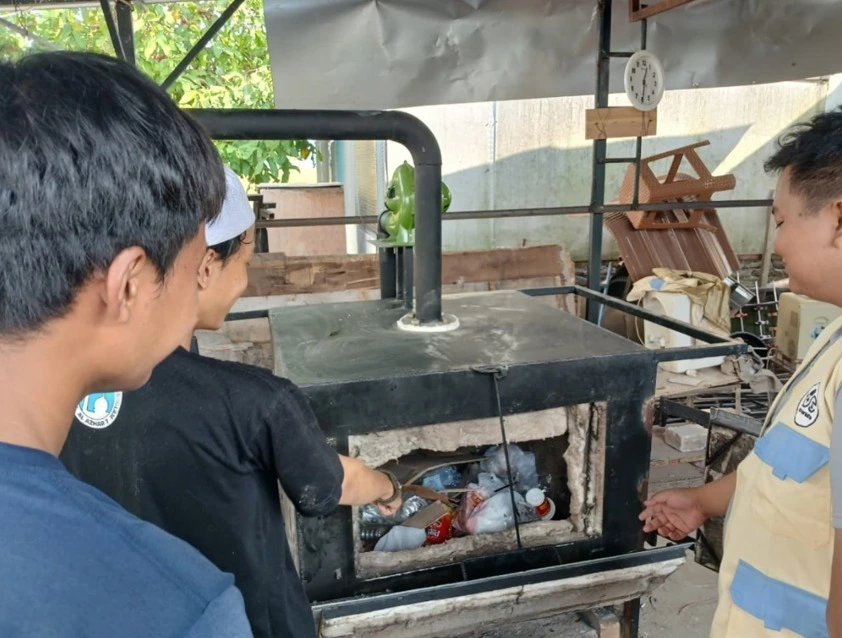
In response to the situation, the PKM team developed an environmentally friendly incinerator designed according to the characteristics of the waste generated in the pesantren environment. Unlike the open burning method, this tool uses a more controlled combustion system and is equipped with a simple emission control mechanism. Thus, the volume of waste can be significantly reduced while minimizing the impact on the environment.
The implementation of the incinerator created by the UNS PKM Team at Pondok Pesantren Hubbul Khoir provides tangible benefits for the partners. The waste management process has become more systematic and no longer fully relies on open burning. In addition to handing over a fully functioning incinerator unit, the team also provided training on the operation and maintenance of the equipment to the pesantren managers. This step was taken to ensure that the incinerator can be utilized optimally and sustainably after the program is completed.
The presence of this incinerator also provides educational benefits for the students and the pesantren administrators. They have the opportunity to witness firsthand the application of science and technology in solving environmental problems in their surroundings. In addition, this program further strengthens the collaboration between universities and the community in providing solutions that meet the needs on the ground.
The implementation of this activity is in line with the targets of the Sustainable Development Goals (SDGs). Efforts to reduce the potential for air pollution support the achievement of SDG 3 (Good Health and Well-being), while the implementation of waste management systems at the community level contributes to SDG 11 (Sustainable Cities and Communities). In addition, the development of appropriate technology for waste management also supports SDG 12 (Responsible Consumption and Production).
In addition, the organization of training on the use and maintenance of incinerators for partners is a form of implementing SDG 4 (Quality Education) through capacity building and knowledge transfer. The collaboration between Universitas Sebelas Maret and Pondok Pesantren Hubbul Khoir also reflects the implementation of SDG 17 (Partnerships for the Goals) in creating a more sustainable environment through close partnerships.
Through the development of this incinerator innovation, the PKM Team of the Electrical Engineering Study Program at UNS hopes to foster a more responsible waste management culture within the community. The success of the innovation is not only assessed by its technological performance but also by the benefits felt by the community and the sustainability of its use in the long term. (NA)