
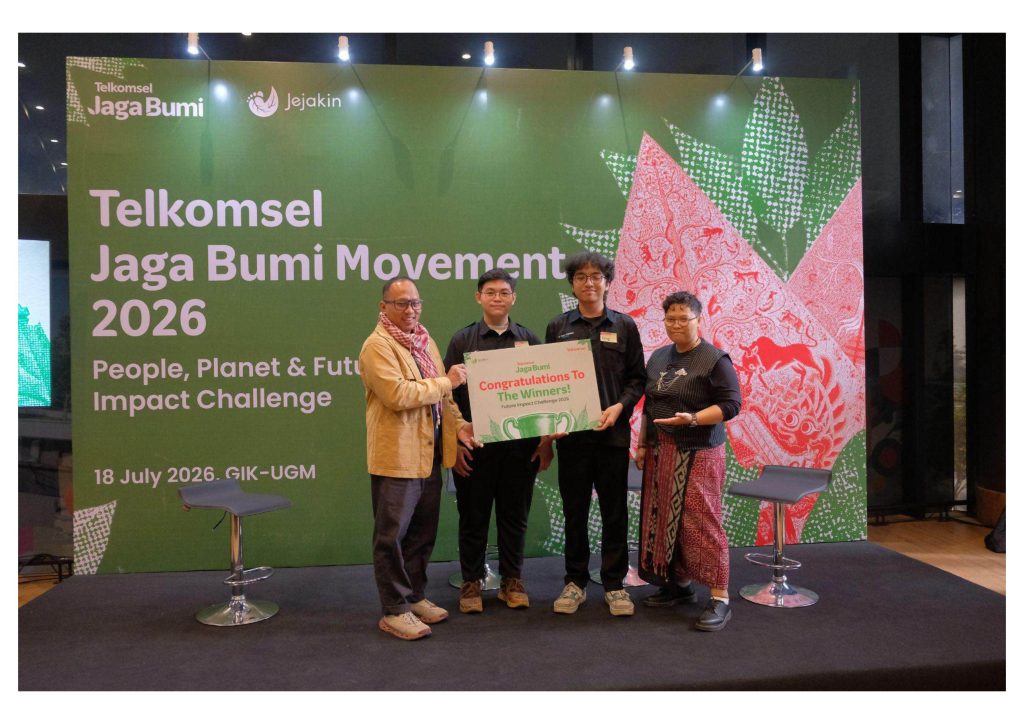
SURAKARTA – A proud achievement has once again been attained by students of the S1 Electrical Engineering Study Program, Faculty of Engineering, Universitas Sebelas Maret (UNS). The team, consisting of second-year students Benedict Janzzen Samuelle Pang (I0724040), Muhammad Rizqi Al-Baihaqi (I0724030), and M. Maula Aufa Nizam (I0724034), successfully secured 2nd place in the Telkomsel Jaga Bumi 2026 competition in the Future Impact Challenge category with their innovation titled “RE-GRID, Utilization of Second-Life EV Battery.” The achievement was earned after competing with more than 170 participants from over 60 cities across Indonesia, showcasing various innovations in the fields of technology and environmental sustainability.
The competition organized by Telkomsel serves as a platform for Indonesia’s youth to present innovative solutions to various environmental challenges through technology, sustainability, and community empowerment approaches. The highlight of the event took place at the Gelanggang Inovasi dan Kreativitas (GIK) Universitas Gadjah Mada (UGM), Yogyakarta, and also marked the conclusion of the Telkomsel Jaga Bumi 2026 program series, which had started since the Earth Day commemoration in April 2026.
In this competition, the UNS Electrical Engineering student team developed RE-GRID, an innovation that utilizes retired electric vehicle (EV) batteries as a safe, economical, and sustainable energy storage system (ESS). The innovation combines the Battery Management System (BMS) with Telkomsel’s Narrowband Internet of Things (NB-IoT) technology to monitor the battery’s condition in real-time, allowing for safer and more efficient utilization of second-life batteries.
The idea stems from the increasing adoption of electric vehicles in Indonesia, which is expected to be followed by a rise in the number of batteries reaching the end of their lifespan in vehicles. This condition has the potential to increase the amount of battery waste in the coming years if a safe reuse system is not prepared. Although no longer optimal for electric vehicle needs, the batteries still have a significant capacity to be reused as energy storage media.
That success is also inseparable from the support of laboratory facilities and the guidance of lecturers from the S1 Electrical Engineering Study Program at UNS, who encourage students to develop research in the fields of power systems, embedded systems, the Internet of Things, and sustainable technology to address the energy transition challenges in Indonesia.
The Future Impact Challenge is one of the programs within Telkomsel Jaga Bumi 2026 that focuses on seeking innovative ideas in the fields of environment and sustainability. This competition encourages participants to present solutions that are not only technologically innovative but also have implementation potential and provide real social, economic, and environmental impacts.
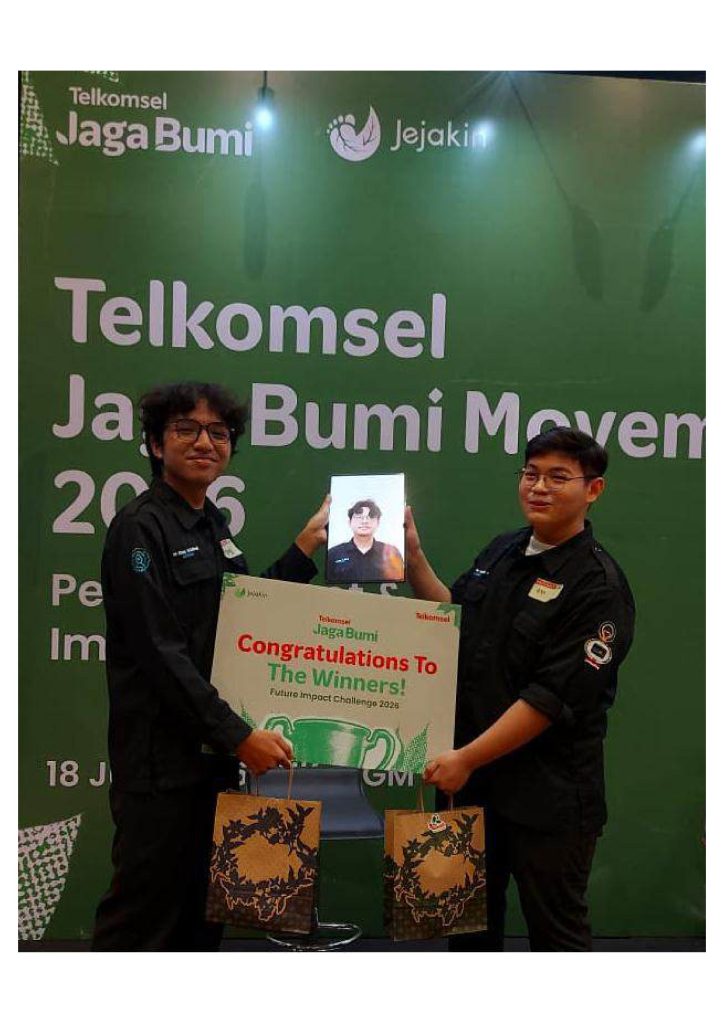
The achievements of the UNS Electrical Engineering student team are expected to motivate the academic community to continue producing innovations that are relevant to societal needs while also supporting the development of environmentally friendly technology. In the future, the RE-GRID innovation is planned to be further developed toward the prototype and implementation stages, so it can make a tangible contribution to supporting the transition to clean energy and more sustainable management of electric vehicle batteries in Indonesia.