
An Electrical Engineering student team from Universitas Sebelas Maret (UNS), supported by the 2026 UNS Community Service “Impactful Learning Grant” (Jarpak) program, has successfully designed and developed an organic waste processing machine to support maggot farming in Desa Ngentak, Bulakrejo, Sukoharjo. This innovation addresses the challenges associated with managing household organic waste, a process that has traditionally been carried out using conventional methods and required significant time before the waste could be utilized as maggot feed.
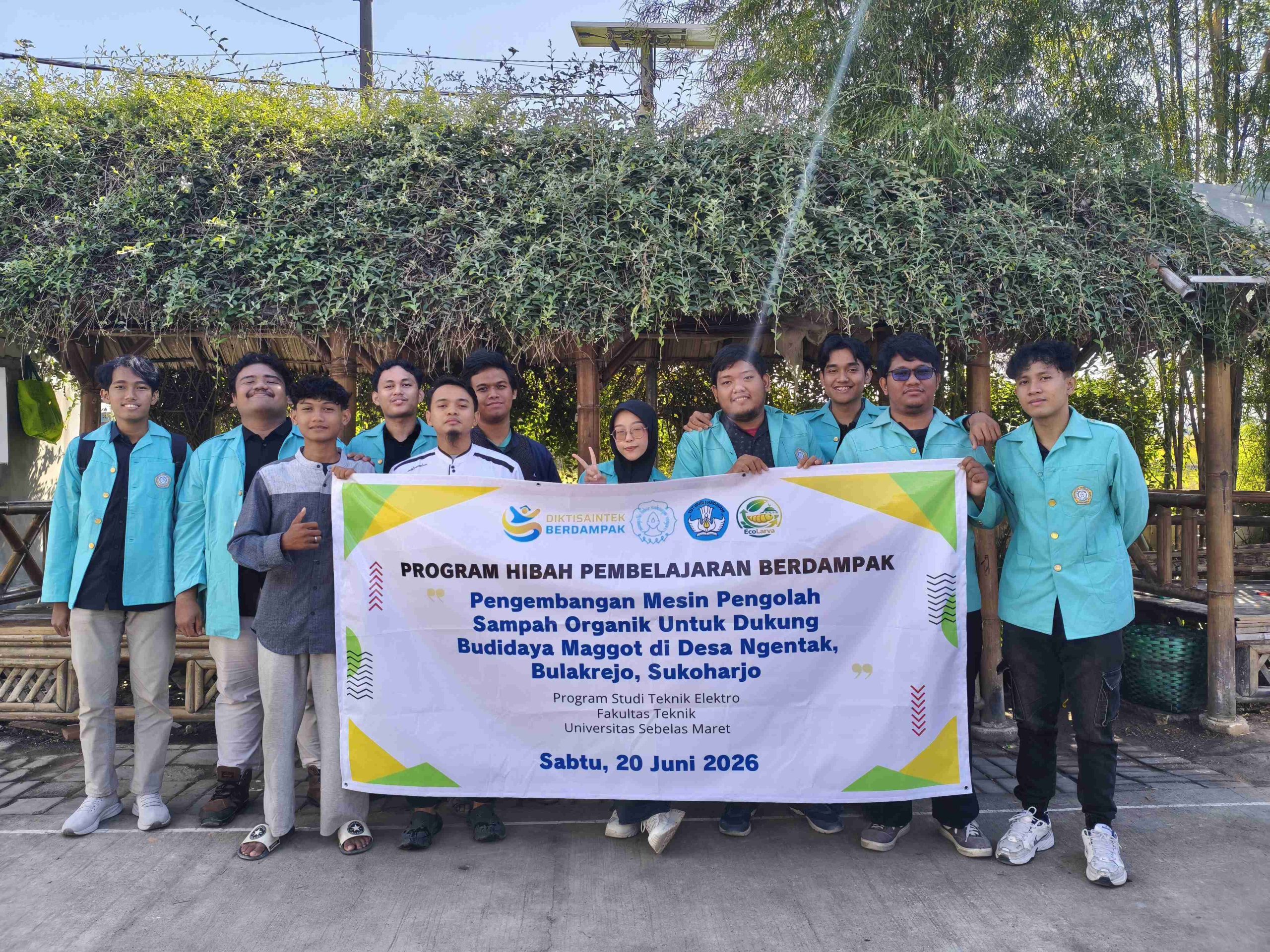
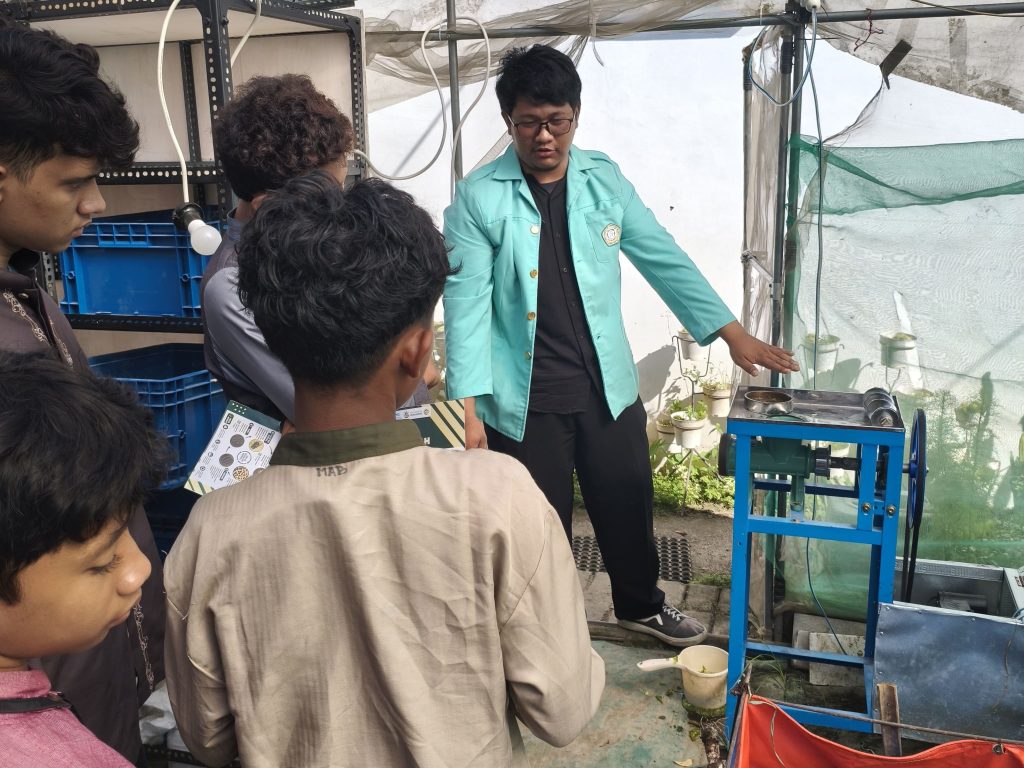
Through the hibah program, the team conducted a series of processes including identifying community needs, mechanical design, tool fabrication, and machine testing to ensure it meets the requirements. The developed machine is an organic waste shredder that can grind various types of organic waste into smaller and finer sizes, making it easier for maggots to consume.
This machine uses metal shredding components with a strong construction and is designed to operate continuously in a cultivation environment. The drive system utilizes a 1-phase electric motor with a power of 3/4 HP, chosen with consideration of the electrical infrastructure conditions in the village, which generally only has a 1-phase power supply. This machine is capable of shredding organic waste effectively to a finer consistency compared to the previous treatment, which relied on soaking for several hours before being given to the maggots.
This chopping process provides benefits to the efficiency of organic waste management. The finely processed organic material allows maggots to consume and decompose waste more quickly, thereby accelerating the cultivation cycle and reducing feed preparation time. In addition to improving waste processing efficiency, the results of maggot cultivation are also expected to be utilized as an alternative feed source that supports the sustainability of the fish and poultry farming sectors in the community.
The Impactful Learning Grant Program took place from March 2026 to July 2026 under the guidance of Ir. Sutrisno, S.T., M.Sc., Ph.D. The development team consisted of 10 students from the 2023 batch of the Electrical Engineering Department at UNS, namely Aisyah Alfi Fadhillah as the team leader, along with Alfredo Galdika, Adam Bagus Agitya Putra, Diya’ Nasaban Ismail, Muhammad Dony Abzar Siregar, Hiskia Garnet, Fukas Laksito, Alfa Fabela Yudhistira, Hindaam Malaimal, and Roisa Hari Wijaya.
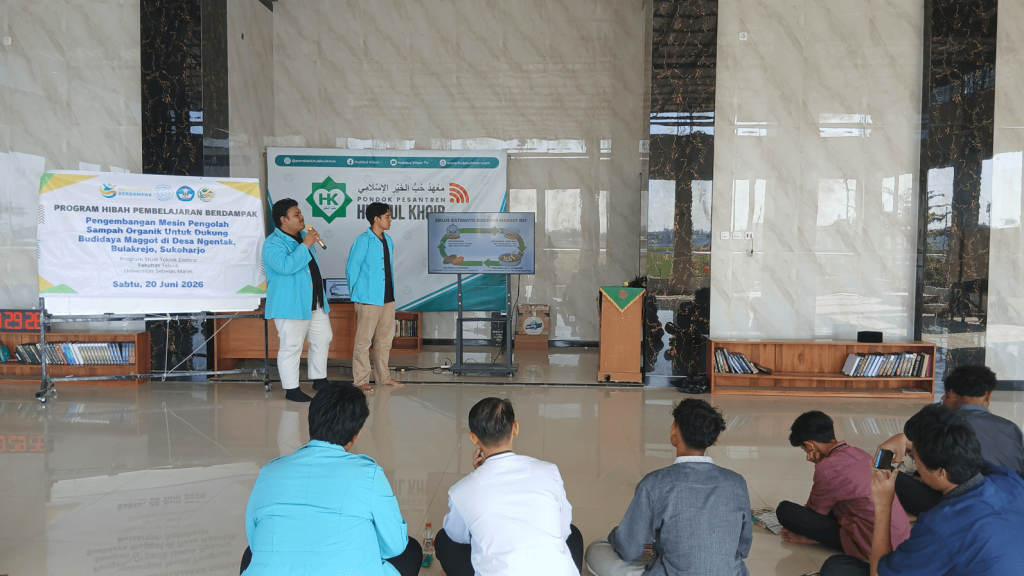
After the development and testing process of the tool was completed, the team conducted socialization and training activities for the community of Desa Ngentak as the primary users of the technology. The training includes machine operation procedures, routine maintenance techniques, safety aspects of use, and strategies for utilizing the results of organic waste processing in a sustainable maggot cultivation system. The team also provides assistance during the initial implementation phase to ensure that the tools can be used independently and optimally by the community.
The representative of the Desa Ngentak community, Riski Bagus, expressed his appreciation for the innovation developed by UNS students. He hopes that the presence of this machine can help the community manage organic waste more practically while also opening up opportunities for cultivation-based economic development. “We hope this tool can be used sustainably by the community, helping to reduce the accumulation of organic waste, and supporting maggot cultivation which can later be utilized for fish and poultry feed,” he said.
Meanwhile, Ir. Sutrisno, S.T., M.Sc., Ph.D., as the supervising lecturer, stated that this activity is a form of appropriate technology implementation developed by students to directly address community needs. “This program not only focuses on technology development but also on how that technology can be applied in real terms and provide long-term benefits to the community.” Through the processing of organic waste and its utilization in maggot farming, it is hoped that a more efficient, sustainable, and economically valuable system will be created,” he explained.
In the future, the team hopes that this organic waste processing machine innovation can serve as a model for the application of appropriate technology for other villages with similar potential. Further development is also expected to support the achievement of the Sustainable Development Goals (SDGs), particularly SDG 12 – Responsible Consumption and Production through more responsible waste management and efficient resource utilization, as well as SDG 17 – Partnerships for the Goals through collaboration between universities and communities in creating sustainable solutions. With this approach, household waste management can be integrated with the aquaculture and poultry sectors, creating a more independent and sustainable circular economy.